Program
This one-day symposium brings together academic and industry leaders to explore the role of generative AI in biochemistry and health. The program combines keynote lectures, research presentations, and discussion sessions designed to foster scientific exchange and cross-disciplinary collaboration.
Opening Remarks
France
The Symposium will open with remarks by Thierry Coulhon, President (Institut Polytechnique de Paris), Gaël Richard, Scientific Director (Hi! PARIS) & the Symposium’ Scientific Committee.
Meet our Keynote Speakers

Janna Hastings
Switzerland
Senior Research Scientist - Idiap Research Institute
Knowledge alignment for generative AI in health: Can we have the best of both worlds?
Monday, May 4 – Télécom Paris
Generative AI is becoming widely adopted for a range of applications in biochemistry and health, such as interpreting measurements, automating annotation and analysis, accelerating discovery and generating candidate therapeutics. However, despite these impressive capabilities, such models perform unreliably for most tasks and lack precise grounding in firm constraints. On the other hand, formal knowledge-based systems are reliable yet brittle. There is therefore great interest in the potential of combining generative models with formal knowledge and logical constraints -- knowledge alignment -- in order to maximise their reliability and guarantee reproducibility. In this presentation, drawing examples from chemical language models and multi-modal generative models, I will discuss the state of the art, emerging frontiers and persistent challenges in knowledge alignment for generative AI in biochemistry and health.
Janna Hastings was born in Cape Town, South Africa where she completed her undergraduate studies in Mathematics and Computer Science. Thereafter, she moved to Cambridge, UK to join the Cheminformatics and Metabolism group at the European Bioinformatics Institute (2006-2015) where she led the development of the ChEBI molecular ontology and metabolism knowledgebase. She completed part-time Master’s degrees in Computer Science (University of South Africa, 2011) and Philosophy (Open University, 2012) before obtaining her PhD in Computational Biology from the University of Cambridge (2015-2019). Subsequently, she completed postdoctoral studies at the Otto-von-Guericke University Magdeburg (2019-2022), at the EPFL (2020-2022), and at University College London (2017-2022). Between August 2022 and December 2025 she was Assistant Professor of Medical Knowledge and Decision Support at the Institute for Implementation Science in Health Care, Faculty of Medicine, University of Zurich, and Vice-Director of the School of Medicine at the University of St. Gallen. Since January 2026, she has taken up the position of Senior Research Scientist at the Idiap Research Institute where she leads a group focused on advancing AI methods for health-related applications, particularly hybrid approaches that combine knowledge with large-scale data.

Adrien Coulet
France
Researcher - INRIA Paris
Generative AI for Clinical Information Extraction and Diagnosis Decision Support
Monday, May 4 – Télécom Paris
Large language models are opening opportunities to design new data-driven approaches that leverage the vast amount of medical knowledge available in the scientific literature. I will illustrate this potential through two ongoing projects. The first focuses on privacy-preserving generation of synthetic cancer pathology reports, which are used to improve the performance of automatic information extraction from clinical texts. The second project targets medical decision support in the context of low-quality and small-sample regimes, and illustrates how background knowledge can help in this challenging settings.
Adrien Coulet is a researcher at Inria in Paris. His work focuses on data-driven and knowledge-guided approaches to knowledge discovery and clinical decision support in biomedicine. He earned his PhD in computer science from the University of Lorraine, where he was affiliated with Inria’s Orpailleur team, and completed a postdoctoral fellowship at Stanford University.

Michalis Chatzianastasis
France
Machine Learning Scientist - Natera
DNA Foundation Models and AI Agents for Precision Oncology
Monday, May 4 – Télécom Paris
Generative foundation models trained on genomic data are reshaping how we study and act on cancer biology, enabling new approaches to sequence understanding, immune recognition, and clinical decision support. In this talk, I will present ongoing work at Natera focused on DNA foundation models that learn and prioritize oncogenic variants directly from genomic sequences, alongside AI agent–based systems that translate these representations into clinically actionable insights. I will highlight oncology-focused applications ranging from neoantigen prediction to clinical trial matching, where generative models and agents jointly reason over genomic, molecular, and clinical constraints at scale.
Michail Chatzianastasis is a Machine Learning Research Scientist at Natera, working at the intersection of machine learning and biology to advance precision medicine. His research investigates how deep learning systems can model complex biological processes, with a particular emphasis on biological foundation models trained on multimodal genomic data. His work focuses on developing machine learning systems that support next-generation diagnostics and therapeutics. Before joining Natera, he previously interned at InstaDeep and the Simons Foundation, contributing to research on graph learning methods and foundation models for single-cell data. He earned his PhD from École Polytechnique, where his research focused on graph representation learning methods for biological applications.

Arne Schneuing
Switzerland
Postdoctoral Researcher - École polytechnique fédérale de Lausanne (EPFL)
Opportunities and Challenges of Generative Models for Structure-based Drug Discovery
Monday, May 4 – Télécom Paris
Structure-based drug design aims to develop new therapeutics by leveraging the three-dimensional structures of biological targets. By enabling fine-grained control over drug–target interactions, it holds the promise of accelerating development timelines while improving binding affinity and specificity.
Generative deep learning methods are rapidly gaining traction in this space as they allow efficient exploration of chemical space beyond known compounds. Despite this progress, small-molecule design has not yet achieved the same level of success seen in other domains, such as protein design. A major limitation is the synthetic inaccessibility of many de novo–designed compounds, which constrains experimental validation and feedback.
In this talk, I will discuss recent progress and outstanding challenges in 3D generative modeling for small-molecule design. I will present results showing that diffusion and flow-matching models provide a robust and flexible framework for learning molecular distributions, enabling efficient generation of high-dimensional and multimodal structural data. When combined with tailored sampling and fine-tuning strategies, these approaches can be applied to a range of structure-based drug discovery tasks.
Finally, I will describe ongoing efforts to address the synthesis bottleneck by incorporating chemical reaction rules into the design process. Improving the synthetic accessibility of computationally generated molecules is essential for enabling experimental validation at scale and achieving real-world impact.
Arne Schneuing is a postdoctoral researcher at EPFL in Lausanne, Switzerland, where his work sits at the intersection of generative models, geometric deep learning, and the design of biomolecular interactions. He recently completed his PhD in computational biology at EPFL, supervised by Prof. Bruno Correia (EPFL) and Prof. Michael Bronstein (University of Oxford). Prior to his doctoral studies, he earned MSc degrees in electrical engineering from RWTH Aachen and in systems, control and robotics from KTH Stockholm. Alongside his academic work, he gained industry experience through research internships at Siemens Healthineers and Microsoft Research AI for Science.

Laura Cantini
Group leader/Principal Investigator - Institut Pasteur | CNRS UMR 3738
Multi-modal learning for single-cell data integration
Monday, May 4 – Télécom Paris
Single-cell RNA sequencing (scRNAseq) is revolutionizing biology and medicine. The possibility to assess cellular heterogeneity at a previously inaccessible resolution, has profoundly impacted our understanding of development, of the immune system functioning and of many diseases. While scRNAseq is now mature, the single-cell technological development has shifted to other large-scale quantitative measurements, a.k.a. ‘omics’, and even spatial positioning.
Each single-cell omics presents intrinsic limitations and provides a different and complementary information on the same cell. The current main challenge in computational biology is to design appropriate methods to integrate this wealth of information and translate it into actionable biological knowledge.
In this talk, I will discuss three main computational directions currently explored in my team: (i) dimensionality reduction to study cellular heterogeneity simultaneously from multiple omics; (ii) gene network inference to integrate a large range of interactions between the features of various omics and isolate the regulators underlying cellular heterogeneity and (iii) spatially-informed trajectory inference methods to reconstruct the spatiotemporal landscape underlying cell dynamics.
Laura Cantini is tenured researcher in CNRS, chair in the Paris Institute of AI (PRAIRIE) and G5 junior group leader heading the Machine Learning for Integrative Genomics group. Mathematician by training, Laura works at the interphase of machine learning/AI and genomics. Due to the advent of single-cell high-throughput technologies, multiple large-scale quantitative measurements, a.k.a. omics, can be accessed for the same cells. Laura’s lab focuses on the development of machine learning and AI methods able to co-analyze the numerous available single-cell omics data and translate them into actionable biological knowledge. The work of Laura Cantini has been recognized by multiple grants and awards, including the ERC StG, the Sanofi iTech award and the bronze medal of CNRS.
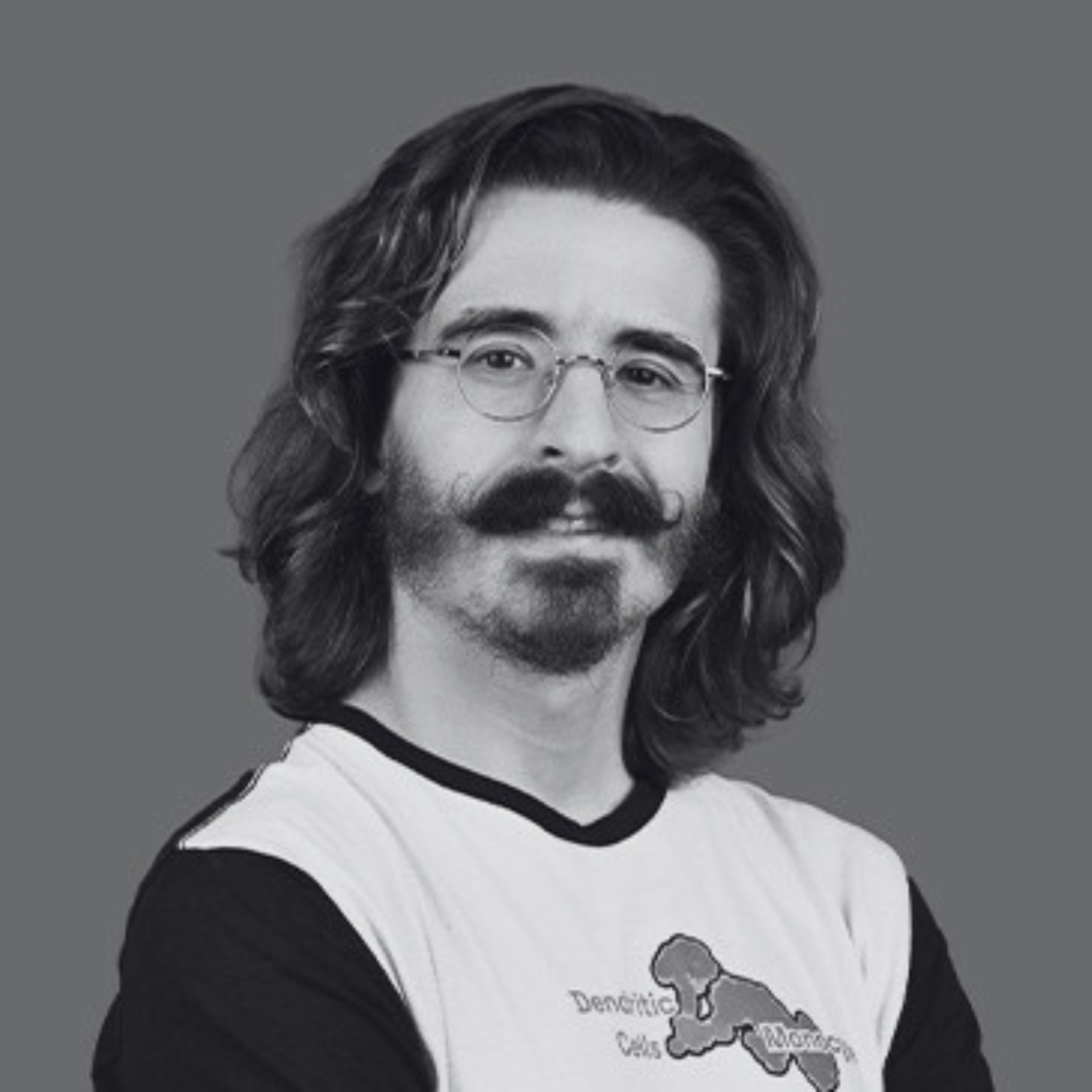
Eduardo da Veiga Beltrame
UAE
Assistant Professor of Computational Biology - École polytechnique & MBZUAI
Single cell omics for personalized medicine in the age of artificial intelligence
Monday, May 4 – Télécom Paris
One of the most exciting consequences of the accessibility of single cell omics technologies is their use in new experimental designs. Beyond atlases, longitudinal studies with many timepoints are also yielding unprecedented volumes and formats of data, with hundreds of millions of cells publicly available. Driven by steadily decreasing sequencing costs and streamlined experimental workflows, single cell omics technologies are now widely used from basic biological research to drug discovery and clinical studies. I will present an overview of the emerging data and AI-models landscape in the field, together with novel clinical study designs enabled by lowering cost and complexity barriers, and current prospects from AI virtual cells to new developments in precision medicine and diagnostics. I will discuss emerging research directions for working with these growing volumes of single cell omics data at the newly established Computational Biology program at the Mohamed bin Zayed University of Artificial Intelligence in Abu Dhabi, and exciting opportunities at the intersection of artificial intelligence applied to biological data.
Eduardo da Veiga Beltrame is an Assistant Professor of Computational Biology at the Mohamed bin Zayed University of Artificial Intelligence (MBZUAI) in Abu Dhabi, where he is responsible for coordinating the new master’s and PhD programs in Computational Biology. His main research interest is the development of methods and tools to work with biological data generated by single-cell omics and their applications in precision medicine.
He holds a Ph.D. in Bioengineering from Caltech, where his primary line of research focused on developing experimental and computational methods and tools for single-cell RNA sequencing and its application to biological questions. Before joining MBZUAI, he was head of bioinformatics at ImYoo, a biotechnology startup spun out of Caltech research that conducts decentralized studies of the immune system using single-cell omics. Prior to ImYoo, Beltrame was a founding scientist at Retro Biosciences, a biotechnology startup dedicated to developing therapies for aging-related diseases.
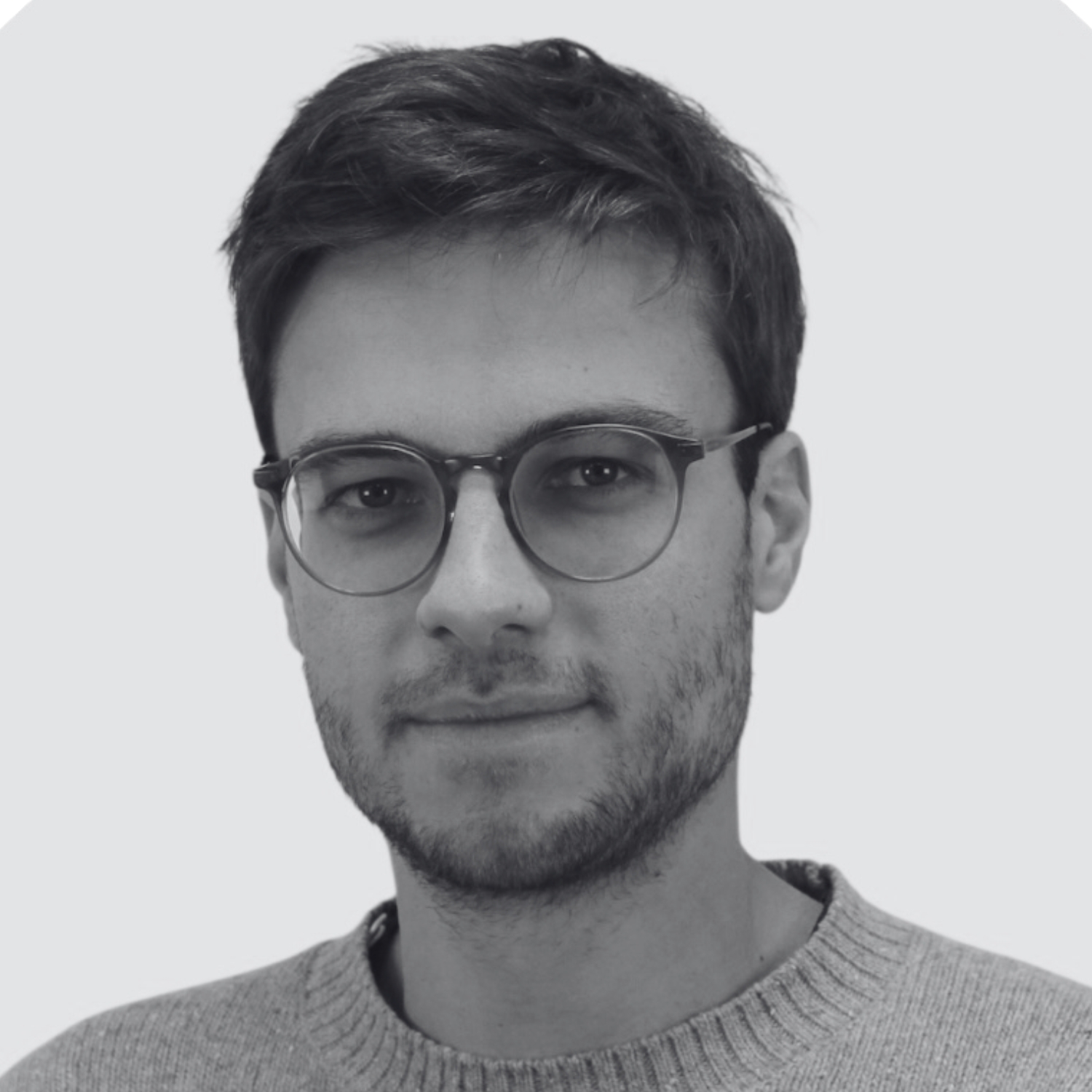
Corentin Dancette
France
ML Research Lead - Raidium
Foundation models for radiology
Monday, May 4 – Télécom Paris
Radiology is central to modern medicine, yet the growing volume of imaging studies outpaces the availability of radiologists. Artificial intelligence holds the promise of alleviating this bottleneck, but the dominant paradigm of training narrow, single-task models for each clinical application remains impractical at scale. Foundation models, large models pre-trained on massive unlabeled datasets and adapted to downstream tasks with minimal supervision, offer a compelling alternative.
In this talk, I will present two complementary projects that we are working on at Raidium, toward general-purpose AI for radiology. First, Curia: a vision foundation model pre-trained with self-supervised learning on over 200 million CT and MRI images. Evaluated on CuriaBench, a benchmark of 19 diverse radiological tasks spanning anatomy, oncology, emergency medicine, musculoskeletal disease, neurodegeneration, and infectious disease, Curia consistently outperforms state-of-the-art models and exhibits emergent cross-modality generalization.
Second, I will present Curia-VL, an ongoing project that extends this Curia to the vision-language domain. Curia-VL integrates radiological images with their associated reports through contrastive and generative objectives, aiming to unlock a new class of applications: zero-shot classification of rare pathologies and AI-assisted report generation. The project scales to billions of parameters , with a three-stage training (scaled vision backbone pre-training, vision-language alignment via a CLIP-like framework on paired image–report data, and training of generative vision-language models). Together, Curia and Curia-VL illustrate how scaling self-supervised and multimodal learning on clinical imaging data can move radiology AI from fragmented, task-specific tools toward unified, flexible systems with broad clinical applicability.
Corentin Dancette is a Senior Machine Learning Researcher and current Lead ML Researcher at Raidium in Paris, where he spearheads the development of multimodal foundation models for radiology. He holds a PhD in Deep Learning from Sorbonne Université and an M.S. from Georgia Institute of Technology, specializing in visual reasoning and out-of-distribution model reliability. His professional background includes high-impact research internships at Meta AI (FAIR) and the Ecole Normale Supérieure, as well as data engineering experience at Datadog.
An accomplished academic, Corentin has published extensively in top-tier conferences such as NeurIPS, CVPR, ICML, and ICCV, contributing to advancements in medical imaging (RadSAM) and bias reduction in visual models. Beyond his research, he has served as a Teaching Assistant for artificial intelligence and computer vision courses across three institutions.

Siak Leng Choi
France
Scientist - Sanofi
Generative AI Meets Mechanistic Modeling
Monday, May 4 – Télécom Paris
Drug discovery and development represent a high-risk, capital-intensive endeavor with historically low success rates. To optimize decision-making throughout this complex process, the pharmaceutical industry has increasingly adopted model-based informed decision-making (MIDD) frameworks.
Central to MIDD is mechanistic modeling, which characterizes the underlying drug mechanism of action (MoA) and enables critical extrapolations for prediction. This approach is particularly valuable when studying novel therapeutic compounds with unique behavioral profiles, where we must reliably extrapolate findings from preclinical animal models to human populations. However, developing robust mechanistic models remains both resource-intensive and time consuming, creating bottlenecks in the development pipeline.
While artificial intelligence has gained significant momentum in predictive applications, current AI approaches face substantial limitations when it comes to extrapolation, a fundamental requirement in drug development. To address this challenge, we propose an innovative integration of Generative AI with mechanistic modeling, leveraging large language models (LLMs) to accelerate mechanistic model development.
This hybrid approach harnesses the LLM's sophisticated capability to construct complex mechanistic model structures that accurately depict underlying biological systems and drug MoA. By doing so, we can predict drug effects even in the earliest stages of discovery, potentially transforming and accelerating the entire drug development process.
Siak-Leng is currently a Distinguished Scientist in Sanofi's Pharmacometrics Team within the Translational Medicine Unit, based in Paris. With 19 years of industry experience in pharmacometrics, he brings extensive expertise across multiple therapeutic areas and modeling approaches. He received his training in biochemistry and toxicokinetics of compartmental/PBPK modeling at the National University of Singapore and Technical University of Munich. His industry experience includes roles as a clinical pharmacometrician at Eli Lilly and Grünenthal, where he developed expertise in various modeling approaches for both continuous and discrete data to support dose selection and trial design for drug development and approvals. Currently, his focus centers on human PK and PK/PD translation to support drug discovery and first-in human dose projection across multiple therapeutic areas, with particular emphasis on inflammation & immunity, immuno- and molecular oncology, and neuroscience.
Featured Roundtable
Knowledge, Representations, and Reliability in Biological AI
France
This panel brings together leading researchers to explore the opportunities and challenges of generative AI in life sciences, from interpreting high-dimensional data to integrating structured knowledge and ensuring meaningful, reliable representations.
Panelists will share insights on evaluating AI-driven predictions, making sense of latent representations, and anticipating the transformative impact of AI on biotechnology, drug discovery, and clinical practice. Attendees will gain a glimpse into how these technologies are reshaping the roles of scientists and healthcare professionals while addressing some of the field’s most pressing questions.
Poster Session
The poster session highlights a range of current research contributions related to generative AI, computational biology, and health. The titles below offer a preview of the topics that will be presented during our symposium’ poster session.
- Beyond Single Alignments: Modeling Uncertainty for CRISPR Off-Target Prediction
- CELL2TEXT: Multimodal LLM for Generating Single-Cell Descriptions from RNA-Seq Data
- Analyzing Lightweight Large Language Models for Biomedical Named Entity Recognition Across Diverse Output Formats
- Prot2Text-V2: Protein Function Prediction with Multimodal Contrastive Alignment
- A Hyperparameter Benchmark of VAE-Based Methods for scRNA-seq Batch Integration
- Least Squares Variational Inference
- How Suicide Risk Unfolds in Private Conversations with LLMs
- Efficient Data Selection for Training Genomic Perturbation Models
- EquiSolv: O(3)-Equivariant Neural Networks for Predicting Protein Solvation Free Energy Fields
- FlowGRN: Scalable and Dropout-Robust Gene Regulatory Network Inference via Flow Matching-Based Trajectory Reconstruction