Program & Speakers
- Home
- Research
- Summer School
- Program & Speakers
Program
This four day summer school brings together leading academics and industry experts to explore AI and Data Science for science, business, and society. The program combines keynote talks, in depth tutorials, an industry roundtable, and a poster session, with dedicated moments for exchange, networking, and collaboration.
Meet the Speakers
Tutorial Sessions
The tutorial sessions are organized as interactive two-part formats combining conceptual presentations and hands-on implementation. Split into two parts, they are designed to allow participants to progressively explore methods, tools, and practical applications through guided demonstrations and coding sessions.
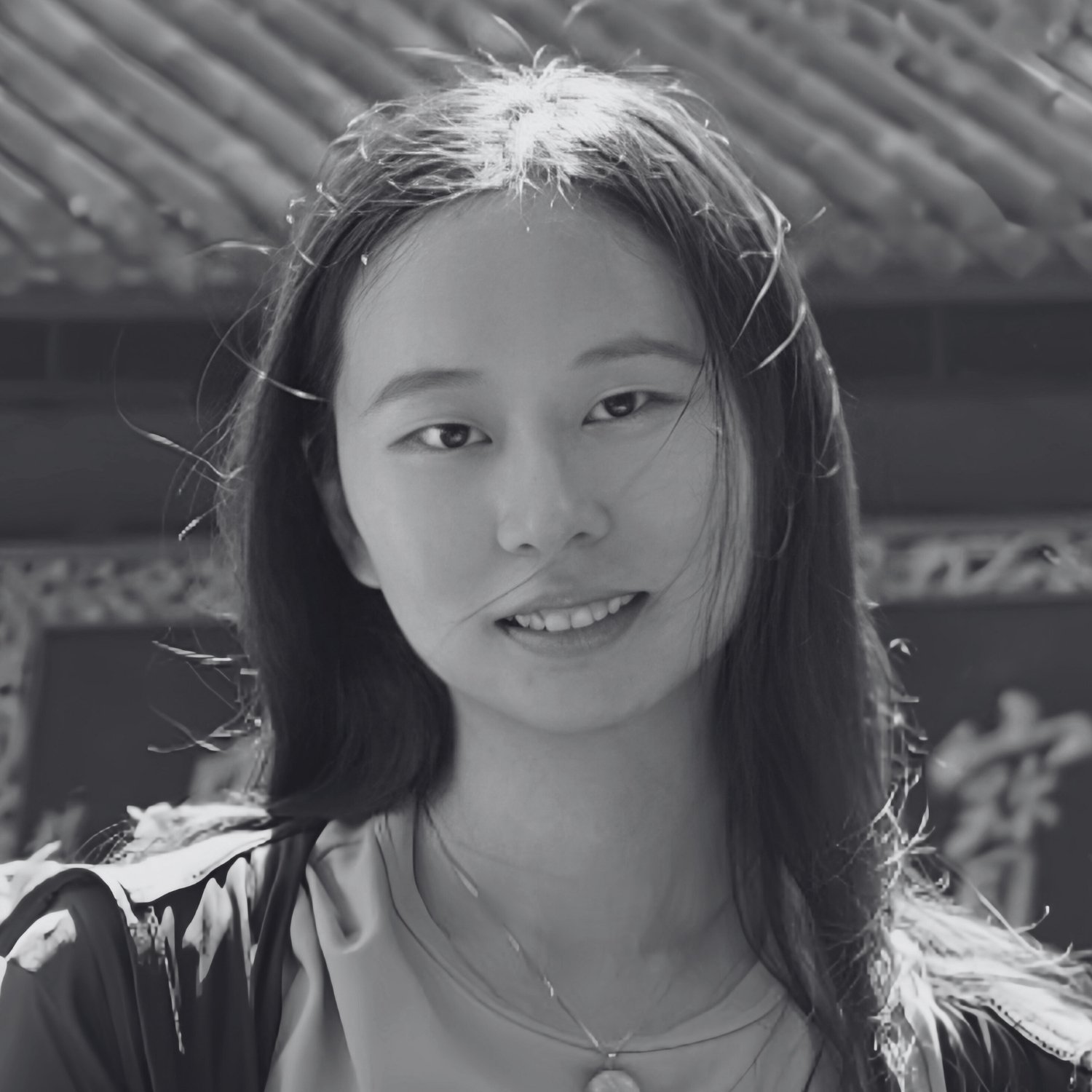
Ye Zhu
France
Assistant Professor - École polytechnique
Dynamic and Structural Sampling for Interpretable Control in Multimodal Generation
Tuesday, June 30 – Télécom Paris
Generative models are revolutionizing daily life through applications such as image and audio synthesis, while also enabling breakthroughs in scientific discovery. Despite their huge practical successes, the interpretability of modern generative models remains relatively underexplored. In this talk, I will present one line of my recent work that investigates the intrinsic dynamics and latent geometric structures of generative models, by drawing on both theoretical and physical perspectives, and demonstrates how these insights can be harnessed during sampling stage to guide and control pre-trained multimodal models in fine-grained scenarios. This enables versatile downstream applications, including text based image editing [NeurIPS’23], image customization [ICLR’24], controllable enhancement of low-level visual attributes [ICCV’25 Highlight], acoustic masking [NeurIPS’25a], and diversity enhancement [ArXiv’26].
Ye Zhu is a Monge Tenure-Track Assistant Professor in Computer Science at École Polytechnique, France. She previously spent two years as a postdoctoral researcher at Princeton University, USA. She received her Ph.D. in Computer Science from Illinois Institute of Technology, USA, in 2023. Her research lies at the intersection of machine learning and computer vision, with a particular focus on dynamic generative models and their applications in multimodal settings, as well as in physics. She is an ELLIS member and a recipient of the MIT EECS Rising Star Award in 2024.

Luiz Chamon
France
Assistant Professor & Hi! PARIS Chair Holder - École polytechnique
Learning under Requirements - Supervised and Reinforcement Learning with Constraints
Wednesday, July 1 – Télécom Paris
Requirements are integral to system engineering and of growing interest in machine learning (ML) as it increasingly faces the challenges of designing AI systems rather than AI components. Today, however, ML does not organically incorporate requirements, such as robustness, fairness, or compliance with prior knowledge. Instead, these behaviors are induced by aggregating violation metrics into the training objective. To be effective, this approach requires careful tuning hyperparameters (penalty coefficients) and cross-validation, a computationally intensive and time consuming process. In this tutorial, I will show how constrained learning can be used to directly incorporate requirements as statistical constraints rather than modifying the training objective. I will show when and how it is possible to learn under constraints, introducing new non-convex duality results to obtain generalization guarantees and show that despite appearances, constrained learning is not harder than unconstrained learning. I will then use these results to derive practical algorithms to tackle these problems, despite their non-convexity. Time allowing, we will develop a parallel theory for constrained RL problems and show that they are strictly more expressive than their unconstrained counterpart. Throughout the talk, I will illustrate how these advances enable the design of trustworthy ML systems for fair learning, scientific applications, robust image classification, equivariant neural networks, and safe navigation. Ultimately, these contributions provide a general tool for tackling a variety of problems in ML and sequential decision-making.
Luiz F. O. Chamon is an assistant professor (tenure-track) and Hi! PARIS chair holder in the center for applied mathematics (CMAP) of École polytechnique, France. He received the B.Sc. and M.Sc. degrees in electrical engineering from the University of São Paulo, Brazil, in 2011 and 2015 and the Ph.D. degree in electrical and systems engineering from the University of Pennsylvania (Penn), USA, in 2020. Until 2022, he was a postdoctoral fellow at the Simons Institute of the University of California, Berkeley, and until 2024, he was an independent research group leader at the University of Stuttgart, Germany. In 2009, he was an undergraduate exchange student of the Masters in Acoustics of the École Centrale de Lyon, France, and worked as an Assistant Instructor and Consultant on nondestructive testing at INSACAST Formation Continue. From 2010 to 2014, he worked as a Signal Processing and Statistics Consultant on a research project with EMBRAER.
He received both the best student paper and the best paper awards at IEEE ICASSP 2020 and was recognized by the IEEE Signal Processing Society for his distinguished work for the editorial board of the IEEE Transactions on Signal Processing in 2018. In 2022, he received the Young Investigators award from the Division of Engineering and Applied Sciences, Caltech. In 2025, he received the S.S. Chern Young Faculty Award, a recognition of talented young mathematicians from École polytechnique. He is currently an ELLIS Scholar of the European Laboratory for Learning and Intelligent Systems (ELLIS).
His research interests include optimization, signal processing, machine learning, statistics, and control.

Vasilii Feofanov
France
AI Research Scientist - 42.com
Towards Powerful Foundation Models for Time Series Classification
Monday, June 29 – Télécom Paris
Time series classification is a fundamental problem arising in various domains, including biomedicine, human activity recognition, and power electronics. However, despite growing interest in versatile foundation models, the vast majority focus on time series forecasting tasks, overlooking classification. In this talk, we present Mantis, an open-source transformer-based foundation model for time series classification pre-trained exclusively on synthetic data via self-supervised contrastive learning. We argue that effective tokenization is critical and that the model's full potential can be unlocked at inference time using dedicated strategies. We will dive step-by-step into building a time series classification model and analyze what makes it different from forecasting and tabular approaches.
Vasilii Feofanov is a research scientist at 42.com with a current focus on developing multimodal foundation models for financial time series. Previously, he was a Senior Research Scientist at Huawei Paris Noah's Ark Lab, focusing on time series research. He earned his PhD in Applied Mathematics from Grenoble Alpes University with a thesis devoted to the theoretical and practical aspects of semi-supervised learning and self-training algorithms.
Dr. Vasilii Feofanov has made multiple contributions to the time series domain, including a foundation model for classification (Mantis), a lightweight forecasting baseline (SAMformer), an adaptation of foundation models to multivariate data (AdaPTS), and the organization of the NeurIPS BERT2S workshop. He has also contributed to self-training algorithms, unsupervised performance prediction of pre-trained models, and the theoretical analysis of semi-supervised classifiers.
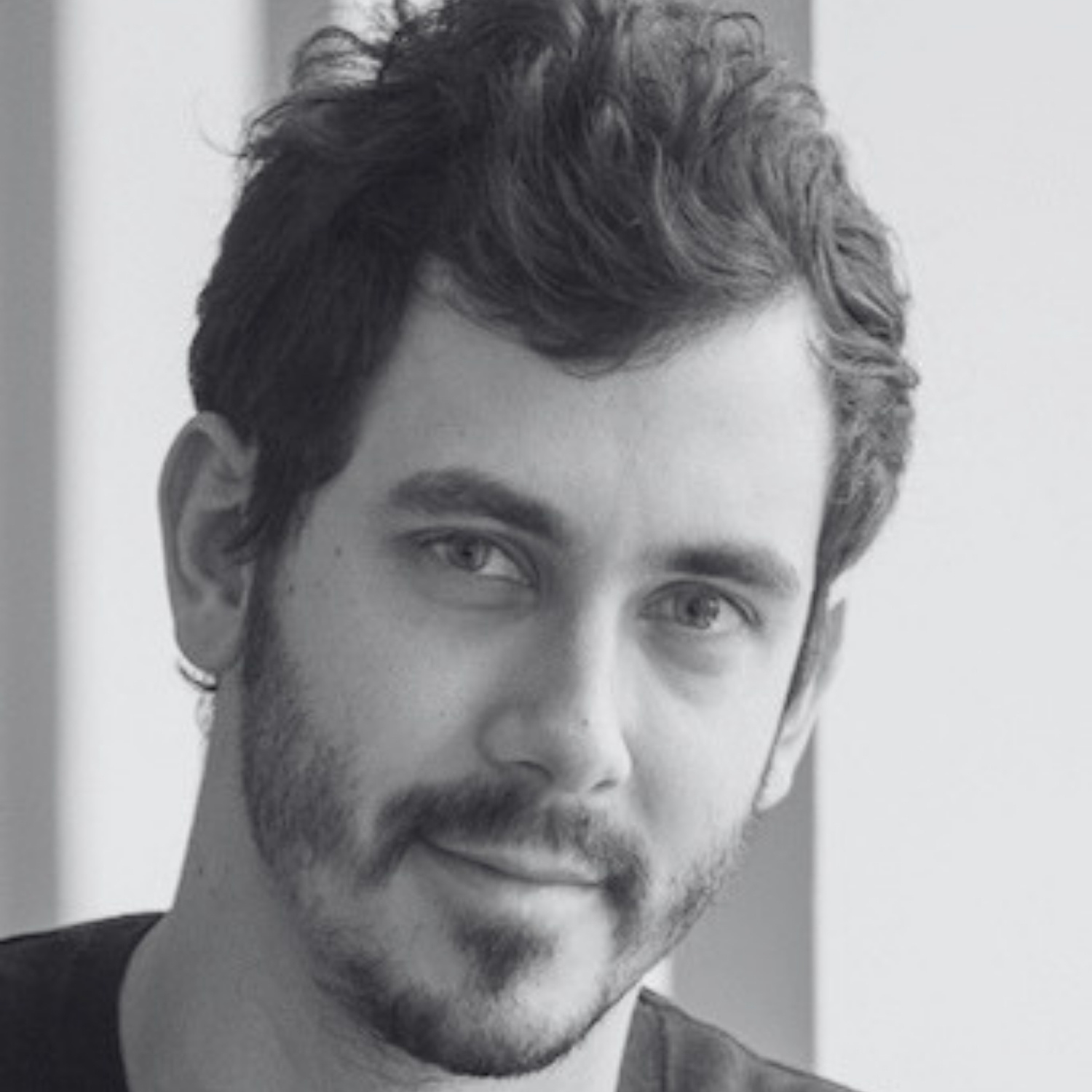
Aurélien Bellet
France
Senior Researcher - Inria
Privacy in Machine Learning and AI
Thursday, July 2 – Télécom Paris
As machine learning systems become increasingly powerful and widely deployed, concerns about privacy leakage from trained models have become central to the development of trustworthy AI. Modern foundation models can unintentionally memorize and expose sensitive information contained in their training data, raising significant technical, legal, and societal challenges.
This tutorial introduces key concepts and recent advances in privacy for machine learning and AI. We first review major classes of privacy attacks targeting machine learning systems, including membership inference, attribute inference, and data reconstruction attacks. We then introduce the foundations of differential privacy and show how it can be used to design privacy preserving training algorithms with rigorous and quantifiable privacy guarantees. Finally, we discuss recent advances in privacy auditing, with a focus on post-hoc methods for reliably and
efficiently assessing privacy leakage in large scale models.
Aurélien Bellet is a senior researcher at Inria, where he is part of the PreMeDICaL team in Montpellier. His current research focuses on the design of privacy-preserving machine learning algorithms in centralized and decentralized settings. Aurélien has served as (senior) area chair for top conferences such as ICML, NeurIPS and AISTATS. He
co-organized several international workshops on machine learning and privacy as well as the 10th edition of the French pluridisciplinary conference on privacy protection (APVP). He also co-organizes FLOW, an online seminar on federated learning with 1000+ registered attendees.

Alasdair Newson
France
Associate Professor - ISIR (Institut des Systèmes Intelligents et de Robotique)
Diffusion Models and Flow Matching for Data Generation
Thursday, July 2 – Télécom Paris
Generative models have taken incredible strides forward in recent years, in particular thanks to the Diffusion Model and Flow Matching algorithms. They can produce astounding, realistic examples of complex data, and have also been repurposed for other tasks, such as image restoration and editing. In this tutorial, we will see the theory behind both methods, which use quite different tools, but result in very closely linked methods. We will see in depth one formulation of Diffusion Models, named Denoising Diffusion Probabilistic Modeling, and briefly present some variants. We will then present the theory behind the Flow Matching approach to generative modelling, and the technical tools needed to understand it. Finally, we will see some concrete applications and extensions of these frameworks to other tasks, in particular image restoration and editing, as mentioned above, as well as some popular architectures.
Alasdair Newson is a lecturer (associate professor) at the ISIR (Institut des Systèmes Intelligents et de Robotique) of Sorbonne Université (France), since 2023. He received his PhD from Télécom Paris (France) in 2014. From 2018 to 2023, he was assistant professor at Télécom Paris. His research interests include image and video restoration, editing and analysis, and the study of generative models for these purposes.
Keynote Sessions
The keynote sessions are designed as one-hour formats combining an in-depth research presentation followed by dedicated time for discussion and audience questions.
Benoit Sagot
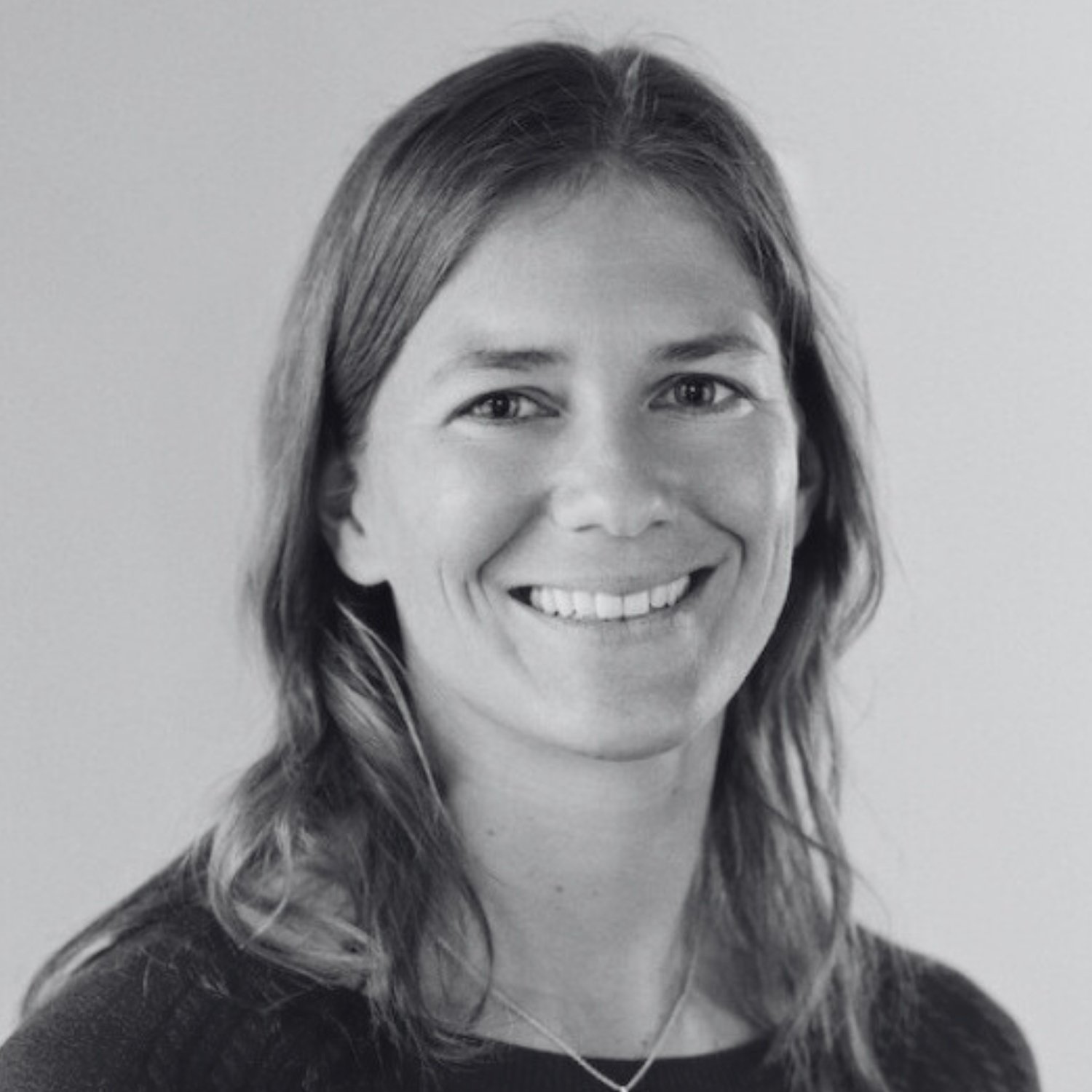
Celestine Mendler-Dünner
Germany
Principal Investigator - ELLIS Institute & Max Planck Institute for Intelligent Systems
Performativity in Machine Learning
Tuesday, June 30 – Télécom Paris
Predictions in the social world often influence the very outcomes they aim to forecast, a phenomenon known as performativity. Self-fulfilling and self-negating predictions are examples of performativity. Of fundamental importance to economics, finance, and the social sciences, the notion has largely been absent from the development of machine learning. When ignored, performativity surfaces as a distribution shift, routinely addressed through retraining. However, when made explicit, performativity reveals two mechanisms fundamental to prediction: learning patterns from data, and steering data through predictions. To formally reason about the consequences for machine learning, I will review the calculus of performative prediction, together with implied solution concepts and key results. Building on this framework, I then discuss connections to strategic behavior on digital platforms and the broader social impact of machine learning. I conclude on a discussion of future directions, including challenges posed by continued training of LLMs.
Celestine Mendler-Dünner is a Principal Investigator at the ELLIS Institute Tübingen, co-affiliated with the Max Planck Institute for Intelligent Systems and the Tübingen AI Center. Her research develops foundations of machine learning with a focus on social questions. She obtained her PhD from ETH Zurich, was an SNSF postdoctoral fellow at UC Berkeley, and worked as a researcher at IBM Research Europe. Currently, she serves on the Board of Directors of EAAMO. For her work, she has received the ETH Medal, the Fritz Kutter Prize, and the IBM Research Division Award. In September, she will join ETH Zurich as Associate Professor.
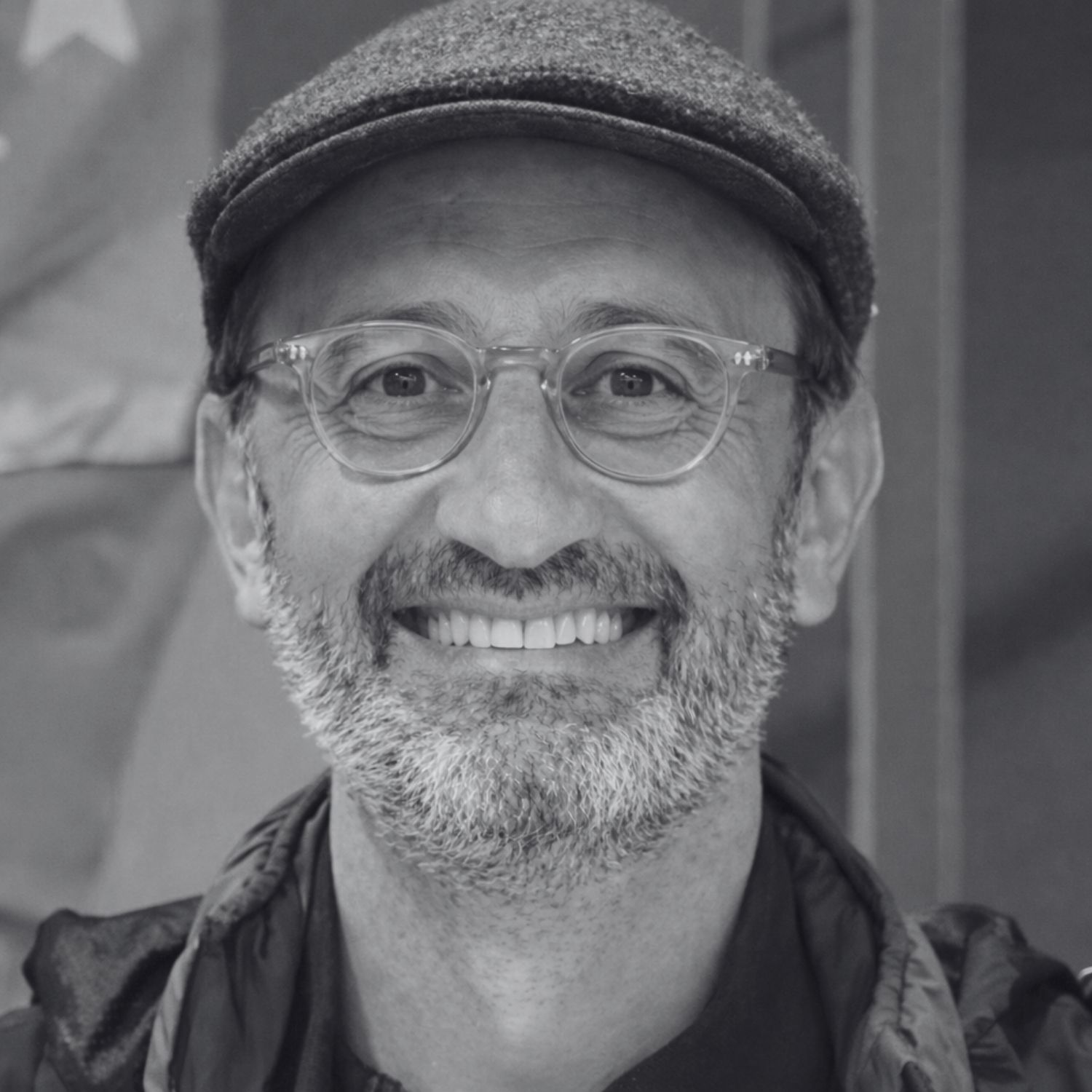
Gustau Camps-Valls
Spain
Professor in Electrical Engineering, leader of the ISP group - Universitat de València
A Critical Look at Explainable AI
Wednesday, July 1 – Télécom Paris
I will give a sarcastic and quite op-ed tour trying to explain why XAI is misleading us. Everything from SHAP plots to counterfactuals may look trustworthy, but underneath, they're often driven by correlations, not causation. In fields like climate, neuroscience and social sciences, that's a serious risk. Inspired by philosophy of science, I argue that explanations must go beyond surface patterns. Fortunately, the frontier is moving fast: causal‐informed SHAP, meaningful counterfactuals (you can't go younger), causal certification in explanations, and structural causal modeling are all promising. But... it's time we treat XAI not just as a cosmetic fix, but as a tool grounded in truth: seamful, thought-provoking, and scientifically defensible.
Gustau Camps-Valls is a Full Professor in Electrical Engineering at the Universitat de València. He is an expert in AI and causal inference for geosciences and remote sensing data analysis, having published extensively. He has a Ph.D. in Physics and is an IEEE Distinguished Lecturer. He has received two European Research Council (ERC) grants (Consolidator and Synergy) and holds a Hirsch's index h = 100+ (Google Scholar). He has also been a Highly Cited Researcher since 2020. Gustau has achieved significant recognition with numerous awards and honors, including IEEE Fellow (2018), ELLIS Fellow (2019), AGU Fellow (2025), IEEE David Landgrebe Award (2024), Fellow of the Academia Europaea (AE) and from the European Academy of Sciences (EurASc), from which he received the Blaise Pascal Medal (2025). He also received the Carl-Zeiss-Humboldt Research Award in 2025.

Antoine Bordes
France
Chief Scientist - Helsing
How AI is impacting warfare today
Thursday, July 2 – Télécom Paris
AI is no longer a future capability in warfare — it is already reshaping how conflicts are fought today, from autonomous strike drones and cognitive electronic warfare to real-time perception and tactical decision-making at machine speed. Drawing on Helsing's frontline experience building and deploying AI systems across air, land, and maritime domains, this keynote will ground these developments in concrete, operational reality rather than speculation.
Antoine Bordes is Chief Scientist of Helsing. He has a deep knowledge of AI R&D. He spent 9 years building the Fundamental AI Research (FAIR) laboratory of Meta, the last 3 as co-Managing Director. He worked as a research scientist at CNRS and as a postdoctoral fellow at the University of Montreal. In 2010, he earned his Ph.D. in AI from Sorbonne University, with two awards for best Ph.D. from the French Association for AI and the French Armament Agency. His work includes 60+ papers with 40,000+ citations.
Practical Sessions
The practical sessions are designed as guided interactive formats where participants can directly experiment with tools, workflows, and implementation approaches alongside researchers and engineers, with dedicated time for questions, exchanges, and hands-on exploration.
The first practical session led by the Hi! PARIS Engineering Team offers participants a hands-on introduction to the foundations of large language models. Through an interactive coding session, participants will progressively build key components behind transformer architectures and GPT-style models, from self-attention mechanisms and transformer blocks to the development of a complete GPT-2 training pipeline using pretrained weights. The session will be led by Awais Hussain Sani, Nassima Ould Ouali, and Marguerite Leang, Hi! PARIS Machine Learning Engineers.
A second practical session will also be conducted by Riccardo Cappuzzo. Find more information below.

Riccardo Cappuzzo
France
Research and Development Engineer - Inria
Skrub: machine learning with dataframes
Wednesday, July 1 – Télécom Paris
"Data scientists spend 80% of their time cleaning data" is a widely shared statistic about how effort is spent when dealing with tabular data. Skrub is a python package whose objective is to reduce this figure and simplify the job of a data scientist from data preparation to deployment. This is done by providing a variety of tools to explore, prepare, and feature-engineer dataframes so they can be integrated into machine learning pipelines. This tutorial describes some of the main features of skrub through theoretical explanations, examples and practical exercises to showcase how skrub can simplify many common use cases.
Riccardo Cappuzzo holds a dual master’s degree: one in Computer Systems Security (Telecom Paris, 2018) and another in Communications and Computer Networks Engineering (Politecnico di Torino). He earned his PhD in Computer Science from Sorbonne Université, where his research focused on automated methods for cleaning tabular data.
Currently, he serves as the lead developer of the skrub Python library and is a member of the SODA Team at Inria. His work involves developing new features for the library and promoting its adoption through public outreach.
Decision-Focused AI:
From Predictions to Better Business Decisions
France
This double session brings together research, education, and industry practice around one of the most impactful frontiers in applied AI: decision-focused machine learning. Rather than optimizing models purely for predictive accuracy, decision-focused AI aligns the learning process with downstream optimization objectives that ultimately drive business value, enabling smarter, more actionable decisions in logistics, supply chains, operations, and beyond.
The program combines a research keynote, an industry impulse pitch, and a hands-on coding tutorial, giving participants both the conceptual foundations and the practical tools to engage with this emerging paradigm.
Session 1 (90 min)
Keynote & Industry Pitch
The first session opens with a research keynote by Prof. Maximilian Schiffer, presenting the theoretical foundations and business applications of optimization-augmented machine learning. This is followed by an impulse pitch from the founders of Praedon (Guillaume Crognier & Silja Wöhrle), a startup that is translating these technologies into commercial solutions.

Maximilian Schiffer
Germany
Professor of Business Analytics & Intelligent Systems - TU Munich
Decision-Focused AI: From Predictions to Better Business Decisions
50 minutes + 10 minutes Q&A
Traditional machine learning is remarkably good at prediction, but most business challenges ultimately require decisions, not forecasts. This keynote explores how optimization-augmented machine learning closes the gap between predictive accuracy and decision quality, and why this distinction matters enormously in practice.
The talk introduces combinatorial optimization layers embedded directly inside neural network pipelines, enabling end-to-end learning systems whose outputs are structured, actionable decisions rather than raw predictions. Key concepts covered include:
- The predict-then-optimize paradigm and its limitations in practice, why minimizing prediction error does not always minimize decision cost.
- Combinatorial optimization as a differentiable layer: how solvers for routing, scheduling, and assignment problems can be embedded in learning pipelines and trained end-to-end.
- Fenchel-Young losses and structured prediction: the theoretical toolkit for training models whose outputs respect combinatorial constraints.
- Dynamic and stochastic settings: extending decision-focused learning to multi-stage problems where decisions unfold over time under uncertainty, with applications to supply chain management, transportation, and resource allocation.
- Real-world impact: case studies illustrating how these techniques generate measurable business value in logistics, e-commerce, and operations.

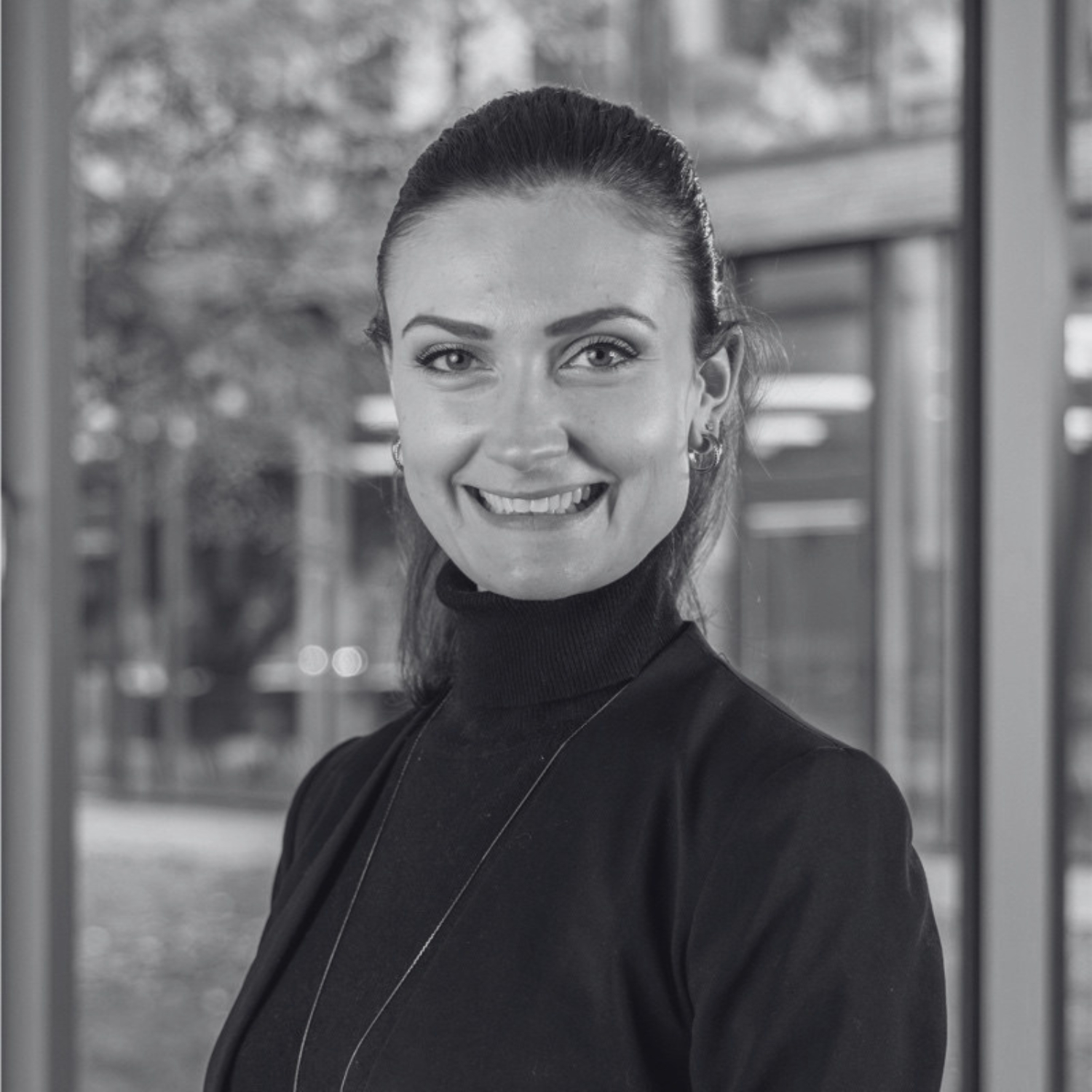
Louis Bouvier & Silja Wöhrle
France & Germany
Praedon
Decision-Focused AI in Practice & How Praedon Turns Optimization into Business Value
20 minutes + 10 minutes open discussion
This impulse pitch bridges the gap between academic research and commercial application, showing how the technologies introduced in the keynote are being deployed in real business environments. The founders of Praedon, a startup dedicated to bringing decision-focused AI into industry, will share their experience translating cutting-edge optimization-augmented ML methods from research prototypes into production systems.
The pitch will cover the practical challenges encountered when deploying these approaches at scale: data requirements, integration with existing enterprise workflows, interpretability demands from business stakeholders, and how to frame the value proposition of decision-quality improvement versus standard predictive analytics. The session offers a candid perspective on what it takes to build a company around a technically sophisticated AI paradigm, and what opportunities remain open for both researchers and entrepreneurs.
Session 2 (90 min)
Hands-On Tutorial
The second session is a practical, interactive coding tutorial in which participants, alongside Léo Baty, implement and train optimization-augmented machine learning pipelines from scratch. The session is designed to complement the theoretical material from Session 1 and provides participants with working code they can adapt for their own research or applications.

Léo Baty
France
Research Engineer - CERMICS, ENPC (IP Paris)
Building Decision-Focused ML Pipelines
90 minutes of Interactive coding, participants follow along using Julia or Python
This tutorial provides a practical introduction to building optimization-augmented machine learning pipelines, with an emphasis on implementation & experimentation. Participants will move step by step from the core building blocks, differentiable optimization layers, loss functions aligned with decision quality, to fully functional end-to-end training pipelines.
The session is structured in two parts. The first part presents guided, step-by-step implementations on benchmark problems, demonstrating how to assemble all the components needed for end-to-end decision-focused learning. The second part is a hands-on practice session in which participants independently implement and train optimization-augmented policies using several state-of-the-art algorithms, exploring their behaviour on different problem instances.
Key topics and skills covered in the tutorial include:
- Setting up and running optimization-augmented ML pipelines in Julia (using the JuliaDecisionFocusedLearning ecosystem) or Python.
- Integrating combinatorial optimization solvers as differentiable layers inside a learning pipeline.
- Implementing decision-focused loss functions and understanding their gradient behaviour.
- End-to-end training: combining prediction and optimization into a unified learning objective.
- Benchmarking and evaluating decision quality vs. predictive accuracy across different algorithmic approaches.
- Participants are expected to have familiarity with basic machine learning concepts and either Python or Julia. No prior experience with combinatorial optimization is required.